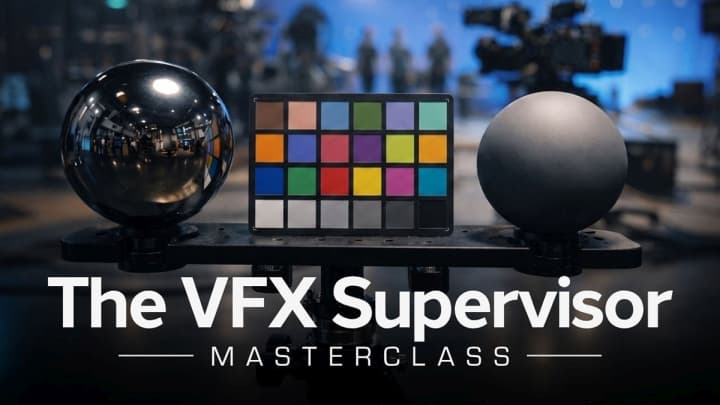
Visual effects are no longer just fixed in post-production. They are part of movie planning, live-action shoots, and final edits. To help artists step into leadership roles, ActionVFX released The VFX Supervisor Masterclass taught by supervisor Eran Dinur.
This course focuses on practical leadership skills for film sets. It teaches you how to guide teams, handle high-stress shoots, and talk to directors without getting lost in technical jargon.
What a VFX Supervisor actually does?
Moving into a supervisor role requires more than technical artist skills. You sit right between the creative vision, technical production, and the film’s budget.
Many great artists struggle when they move up to supervision. The job requires a totally different mindset. Instead of tweaking pixels all day behind a screen, you must evaluate shots quickly. You have to estimate costs before committing a team. You also need to keep artists calm under tight deadlines.
If you cannot manage people, you will fail as a supervisor.
Pre-Production and bidding
Projects succeed or fail before cameras start rolling. During pre-production, supervisors read scripts with producers to break down hard sequences and calculate accurate bids.
Evaluating shot complexity early saves studios from huge budget overruns later. The masterclass uses real film examples like Hereditary and Uncut Gems to show how early planning keeps complex ideas affordable.
Managing the live film set
On a live movie set, the pressure on a supervisor is high. You need to gather visual data without slowing down the cast and crew.
You must set up green screens and place tracking markers correctly. Capturing clean HDRIs and camera lens data has to happen fast. Knowing what data to collect on set saves the post-production team from major headaches later. Miss a camera measurement on set, and your compositors will suffer for weeks.
Talking to the multiple teams
Technical talk does not work with directors and producers. Department heads speak in terms of mood, emotion, and story. They do not care about render times or compositing nodes.
You must translate technical limits into simple words. Clear language builds trust with the director and keeps everyone on the same page.
In post-production, your main job is reviewing shots from artists and vendors. Vague feedback wastes time and money, sending artists in the wrong direction.
Good notes tell compositors and 3D artists exactly what to fix. You might need to adjust edge blending, match shadow levels, or fix tracking. Sharp feedback speeds up approvals, keeps morale high, and finishes shots faster.
Dealing with AI and new tech
Visual effects tools are changing fast with artificial intelligence. However, bringing new tools into a studio pipeline takes careful planning.
AI can help with boring tasks like rotoscoping and clean-up. But using unproven tech can backfire and create new bottlenecks. The course shows how supervisors can spot useful AI tools without disrupting the team.
Conclusion
Check all official details here.